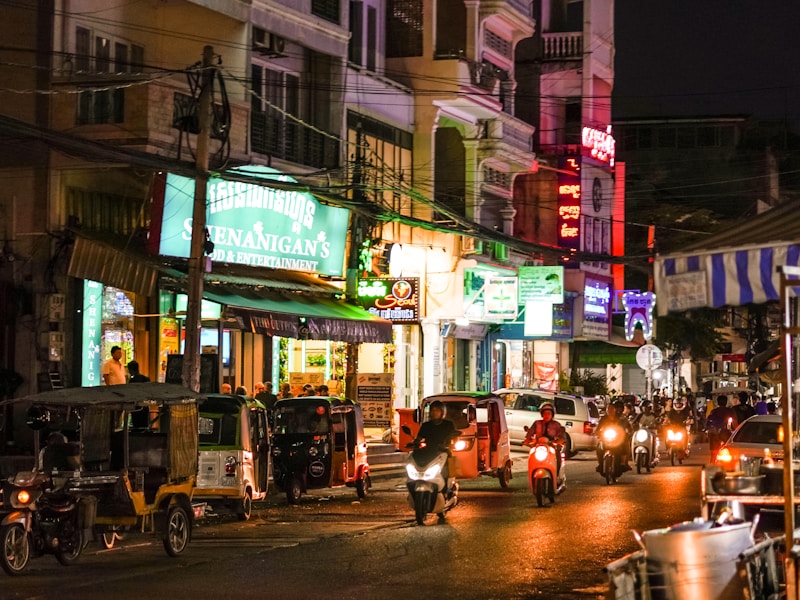
When the sun sets over Phnom Penh, the city transforms. Streets that were quiet during the heat of the day fill with vendors, food stalls, and locals heading out to shop, eat, and socialise. For first-time visitors to Cambodia's capital, the night markets offer an authentic glimpse into how Cambodians spend their evenings - and a chance to join in.
Understanding Phnom Penh's Night Market Culture
Unlike the organised night bazaars found in Bangkok or Singapore, Phnom Penh's night markets are less formal and more integrated into daily life. Most operate from around 5pm until 10pm or later, when temperatures become comfortable and families finish work.
The concept of "night market" here is broad. It includes dedicated market spaces, but also the informal clusters of food carts, clothing vendors, and pop-up stalls that appear each evening along major streets and near public spaces. Locals don't distinguish sharply between these - it's all part of the evening routine.
Phsar Reatrey: The Main Night Market
Located near the Tonle Sap riverfront, Phsar Reatrey (which translates simply to "Night Market") is the most established night market in the city. It runs nightly along Street 108, starting near the Night Market Park and extending toward the Royal Palace area.
The market divides roughly into sections. The southern end focuses on clothing, accessories, and household items - think phone cases, sandals, scarves, and bags. The northern section is where you'll find most food vendors.
Prices here are generally reasonable, though vendors expect some negotiation for non-food items. A polite counter-offer of 20-30% less than the asking price is normal and won't cause offence.
What to Eat at Phsar Reatrey
The food section offers a good introduction to Cambodian street food. Look for:
- Num pang - Cambodian-style baguette sandwiches filled with pâté, pickled vegetables, and grilled meat. These cost around 5,000-8,000 riel (roughly $1.25-2 USD).
- Lok lak - Stir-fried beef served with rice, a fried egg, and lime-pepper dipping sauce. A filling meal for around $3-4.
- Grilled meats on skewers - Pork, chicken, or beef, often served with a tangy dipping sauce. Usually 2,000-4,000 riel per skewer.
- Fresh fruit - Mango, pineapple, and dragon fruit, pre-cut and ready to eat.
Most vendors accept both Cambodian riel and US dollars (the country uses both currencies daily). If paying in dollars, you'll often receive change in riel.
The Riverside at Night
Sisowath Quay, the main riverside promenade, becomes an informal night market each evening. Families spread blankets on the grass near the Royal Palace. Vendors sell everything from balloons and toys to grilled corn and coconuts.
This isn't a structured market - it's simply where locals gather to enjoy the cooler evening air. Walking along the river between 6pm and 9pm, you'll see impromptu football games, couples on dates, and groups of friends sharing food from nearby stalls.
For visitors, this is one of the best ways to experience Phnom Penh without any agenda. Buy a coconut (around $1), find a spot by the water, and watch the city unwind.
Russian Market Area After Dark
Phsar Toul Tom Poung, known to foreigners as the Russian Market, is famous for daytime shopping. But the surrounding streets come alive in the evening with food vendors who cater mainly to locals.
Street 155 and the lanes around it fill with small restaurants and mobile food carts after 5pm. This area is less touristy than the riverfront, so prices are lower and English is less common. Point-and-order works well - most vendors are patient with visitors.
Try the bai sach chrouk (pork and rice) vendors if you're there early evening. It's typically a breakfast dish, but some stalls serve it until they sell out.
BKK1 and Bassac Lane: A Different Night Scene
The Boeung Keng Kang 1 (BKK1) neighbourhood offers a more modern take on evening dining. This isn't a traditional market, but the streets around Street 308 and Bassac Lane have become popular gathering spots with outdoor bars, restaurants, and street food.
Bassac Lane itself is a narrow alley lined with small bars and eateries. It's popular with both expats and young Cambodians. Prices are higher than at traditional markets, but it's a good option if you want to combine street food with a more curated atmosphere.
Practical Tips for Night Market Visits
What to Know Before You Go
- Timing: Most markets are busiest between 6pm and 9pm. Arriving around 5:30pm lets you explore before the crowds peak.
- Cash: Bring small bills in both US dollars and Cambodian riel. Most vendors don't have card machines.
- Dress: Casual and comfortable. Shorts and t-shirts are fine, but bring a light layer - riverside breezes can be cool.
- Transport: Tuk-tuks are the easiest way to get around after dark. Agree on a price before starting (usually $2-4 for trips within central Phnom Penh).
- Safety: Night markets are generally safe, but keep phones and wallets secure. Bag-snatching by passing motorbikes can occur on quiet streets.
Paying at Night Markets
Cambodia is rapidly embracing mobile payments. KHQR - the country's standardised QR payment system - is now accepted at a growing number of vendors, including small food stalls and market shops. Simply look for the KHQR logo displayed at the stall and scan to pay directly from your mobile payment app.
If you're visiting from Singapore, you can pay like a local using a compatible payment app. Currently, LiquidPay is available for seamless KHQR payments in Cambodia. More Singapore mobile payment apps connected to the RoamQR™ network will be announced progressively.
Download LiquidPay
Get the LiquidPay app to start scanning and paying with KHQR across Cambodia.
Making the Most of Your Evening
A good route for first-time visitors: start at Phsar Reatrey around 6pm, browse the stalls and grab a num pang or some skewers. Then walk north along the riverfront, stopping to watch the sunset if timing allows. End with a drink at one of the riverside restaurants or continue to BKK1 if you want a livelier scene.
The night markets aren't about finding rare souvenirs or Instagram moments. They're about participating in a daily ritual that most Cambodians take for granted - the simple pleasure of eating well, shopping slowly, and enjoying the cooler hours of a tropical evening.
For visitors, that's worth more than any purchase you'll make.